Search This Blog

Showing posts with label Eurogames. Show all posts

Sunday, July 29, 2012

Welcome Back Me

This is how blogging works apparently. You get wrapped up in other things in life while your blog starts to just sit around, waiting patiently for you to reappear.

I guess I'm going to try to once again get back into the swing of blogging about my boardgame experiences!


Most recently, I've gotten really into trying to get good at Agricola. I was able to play two games of it this week online with this fantastic website: http://www.boiteajeux.net/ while using Ventrilo to voice chat the other players. What a fun way to play! We played with draft so it took a bit longer to play than usual. I came in third in one and second in the other, which I was happy with since these were more experienced players than I usually play against.


Last week the TotalCon people had a one-day event at the same hotel TotalCon is in February. I got to play a game of Tigris & Euphrates which I hadn't play in a LONG time. Rob K. barely beat me - if the final conflict of the game had worked out, I would have squeaked by him. I played the new Agricola: All Creatures Big & Small, which was cute but not that interesting. I got to play Andy in Labyrinth and I clearly still am not sure how to win with the Jihadists.


Andy then taught me and two others The Castles of Burgundy. I liked it but didn't love it, and would be psyched to play it again. Andy's assessment that it's a bit long in playtime for what it is seemed on the mark to me. You don't really get a sense of building up - there's a lot of sameness over the game, but it has some cool mechanics and ideas. It enters the category of "Euros that I might consider buying, but I'm not convinced yet" alongside Egizia and Macao.

I also got in a game of Puerto Rico with Andy, Richard, and his son Rich. I took it home with unopposed coffee leading into a maximized Guild Hall. A good warm-up game in case I can squeeze some heats of Puerto Rico in at the upcoming WBC.

The week before that was SNEWFest, a yearly get together for an all day wargaming extravaganza. I'll put a retroactive report on that up here some time soon!

Also, I am currently at the WBC and decided to play Through the Ages instead of Paths of Glory or Hannibal. I'll report on my two games of TTA later tonight!
 
Chris

Thursday, August 4, 2011

WBC Day Six

Thursday at the WBC feels like the tip of the mountain - you're right in the thick of things, but you know you are getting closer to the end of the con than the start. That said, I try to savor the experience as best I can.

The first game of the day was the final heat of Power Grid. This time it was Benelux, and I got put at a table with Bill Crenshaw, who I've played at least twice before in Power Grid and talked to about his game, Manifest Destiny. He's a tough Power Grid player, and I once again came in second, giving me two seconds and a first leading into tomorrow morning's semifinal. I'm pretty consistent at getting firsts and seconds in the heats in Power Grid - I think I had a similar record last year and got second in the semifinal to Raphael Lehrer on the Italy board. Tomorrow will be Korea, which I've never even played before...

After a snack, I entered Caylus and got assigned a table with my wife Bronwen and a guy named Jim who was a really fun opponent. He hadn't played Caylus in a few years, and I beat them pretty handily. (I hope Bronwen isn't going to ever read this... )

That was followed by two back-to-back games of Le Havre. The second heat had Grant Ladue, who I've played Wilderness War with and talked to on wargameroom.com, and two nice older guys who hadn't played very often. We ended up having to cut the game short, and since none of them cared to advance and they agreed I had a good set-up for the end game, they gave me the win. The second game was the semifinal with Mike Kaltman (who is also the GM of Caylus) and a guy who was in my Power Grid game earlier. We had a great, tight game, but Mike clearly knows the game well and got a well deserved win, mostly by building steel ships and luxury liners. I did the most shipping I've ever done in Le Havre, which was interesting, and took second. That should make me come in 5th or 6th overall...

I decided to forgo the second heat of Agricola because I didn't feel like playing a 5 player game. I went to the Lampeter room and signed up for the Saratoga tournament, which I often don't get to play because of its usual conflict with Twilight Struggle (which last year and this year conflicted with Power Grid semis, sigh.). I got paired up with Chris Byrd, who just learned the game, and we had a fun, tense game dancing around the edge of Freeman's Farm trying to flank each other. He captured the Ottawa Indians in the midgame, and Gate's wing was released as early as possible. His attack along the Hudson to try to get my baggage train ended up costing me the game as he did a step loss to a unit there. I probably should have put more thought into how to defense that region. I wish I had more WBC time to find some fun games of this series. Someone out there has got to want to play them.

Tomorrow: Power Grid semis, Agricola heat 2, Agricola semis, and Princes of Florence heat 2!!!

Chris

Wednesday, August 3, 2011

WBC Day Five

Another exhiliarating and exhausting day at WBC! I'll write more later but here's the wrapup:

I came in 2nd in the closest game of Brass ever: 141-141-140-115, losing by 1 on the income track.

I came in 2nd in Power Grid on the Central Europe map, losing to the GM and two-time winner, Jim Castonguay... I'll accept that loss!

I reluctantly played Agricola, because I found out it was 5 player games, and somehow I pulled it out, mostly through mastery of animals. I'm not great at Agricola, but I have my moments where it all clicks.

I played a snoozer of an El Grande game and got destroyed. I don't understand how to play well, and don't really enjoy the game all that much, I've decided.

That was followed up by a fun game of Princes of Florence with two strong players, David Platnick and Greg Thatcher. David crushed us with 7 works from the two seat, and I came in second, beating Greg on tiebreak money.

The end of the night was a late start Brass at 9 pm, that ended at 12:30. I got to play with Bruce again, which was great. He crushed us this time with a score like 160-120-111-105.

Awesome times, and I'm glad to be in three semis: Power Grid, Agricola, Le Havre.

Chris

Tuesday, August 2, 2011

WBC Day Four

Despite wanting to catch up on sleep, of course I again was instantly awake at 7:30. At least this meant I could bring Andy Latto an extra copy of Innovation for his demo at the Showcase Sampler as he had requested. As his demo was starting, Eric Brosius walked by and we decided to try out his copy of A Few Acres of Snow, which I had only played about 40% of a game of the other day. Eric smoked me as the French - I tried out a specific strategy I thought of but misimplemented it. I thought it was a pretty cool game and I want to play it more... not sure if I want to buy it yet though.

I stopped by the auction store and found two good deals - Wellington and Imperial, two games I was looking for. I hope I can find people who would play Wellington at some point...

After that I ran into one of our regular friends at WBC, Laura. It was good to see her again since she missed last year's WBC, so I tracked down Andy after his demo and we grabbed another Andy, Andy Gerb, and picked out Yspahan as a game that we were all interested in playing. It was definitely a learning experience since Andy won last year's Yspahan tournament and Laura clearly knew what she was doing. Andy took it down with lots of cards and camels in the last week.

Then, one of those glorious days at WBC got even brighter. I ran into Alex Bove, who is an awesome and intense gamer - every time I talk to him I learn something knew about thinking about games. He's one of the few people I know who really likes Princes of Florence, so we got a 5 player game together. I was very happy to win after the guy in seat 2 decided to go builder heavy and let me have the extra Profession card. The scores ended up very tight: 59-58-58-57-48.

Then the official tournaments kicked off with the Power Grid at 6 pm. I had a fun table with some people I vaguely knew, Deniz and Meghan, a nice 25 year old guy named Derek, and a funny, inattentive 14 year old named Eli. We played the Germany map with the alternate power plant deck, which I owned but hadn't played with yet. In a very, very close game, I pulled it out with 15 cities powered by not building cities on the second to last turn and getting the Step 3 card to come up so I could build out first. I also waited out the auction so even though people had 16 capacity, I doubted they had the cash to build to 16. Derek had about 7 Electros while I had around 27 for the win!

Finally, I was agonizing over a "cake-or-pie" decision: Le Havre or Ra. Even though Le Havre would keep me up later than I wanted (I'm psyched for Brass 9 am tomorrow...), I knew I just like it better overall. The judge didn't randomize the tables for Le Havre, so I ended up playing with Rich Meyer, who is from western Mass but I don't think I had ever played a game with, just because he was sitting near my board. We had just had a nice dinner together with my wife Bronwen and the winner from the St. Pete game yesterday. After the game started, I knew I had made the right decision. The other players were fun, a nice younger guy and Pete Staab, who I knew from the Chicago Express tournament last year. I pulled out a tight 6 point victory with Rich in second place, mostly by building efficiently.

Winning three of my favorite games back-to-back was certainly satisfying! Tomorrow: another day full of heavy eurogames. Check out this intense line-up:

   9    Brass
   12  Power Grid
   3    Agricola
   6    El Grande
   8    Princes of Florence
   10  Brass

Chris

Saturday, July 23, 2011

LibertyCon Part 2

Day 2 of LibertyCon was on Friday July 1, and I got to play tons of games, including two for the first time. Here was the lineup:

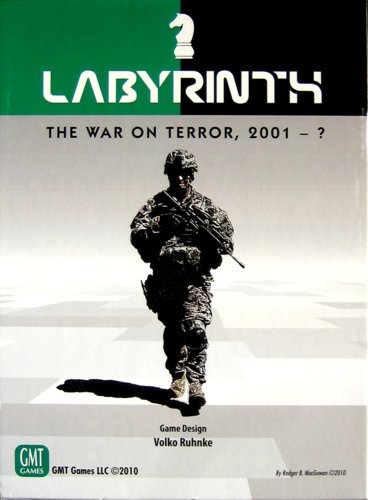
   Labyrinth
   Indonesia
   Dream Factory
   Taj Mahal
   Princes of Florence


This was my second game of Labyrinth, again playing against Andy L. I took the Jihadists since the last time we had played (at the TotalCon game day), I had the Americans. This game has quite a bit of asymmetry! Again Andy took me out in pretty quick order, getting a successful conversion of the Gulf States to Good governance and then rolling from there. I like the learning curve here, there's things to learn about - how do you respond to things that your opponent does makes a big difference in whether you can hold them off or get rolled.


I had been waiting a long, long time to play Indonesia. Every time I've been at Eric's, I've looked longingly at the game sitting on the shelf and even read the rules once while between games. It's highly rated on BoardGameGeek, and sounds exactly like the kind of game I really like: heavy and economic. The way you can merge companies in the game sounded really interesting, and the people at LibertyCon who played it before seemed enthusiastic about it. So finally I was going to get my chance!

After the first play, I was left feeling like I really liked Indonesia. It had some similarities to 18xx games in that you were controlling companies that had to operate, but without the track laying. People have complained about the graphic design and components, which while beautiful, really do get in the way of game play. Some of the areas on the board are way too small, especially since the component used for a city is a glass bead.

One of the most fascinating and bizarre aspects to the game is that you can cause two companies to merge. The strange thing about the way it works mechanically is that one player can cause two companies owned by two other players to merge, and there is nothing they can do to stop it. This makes Indonesia really feel pretty abstract and unreal, but from a game standpoint it's a really interesting mechanic. I was looking forward to playing it again soon so I could try out some different things.


After that, Eric taught us Traumfabrik, which has recently been printed in English as Dream Factory. This game was a lot of fun - you get three movie scripts which require different components: for example an actor, a director, and special effects. Another script might require two actors, a camera, and a director. Some actors are better than others, so all of the pieces have a value. When you finish a film, you get points for it based on how good the actors, directors, etc. that you got were. You are bidding currency in a closed economy: after the winner gets the pieces they just bid on (they come in lots of 2 or 3 components), you divide the money up amongst the other players. This means that the game ebbs and flows for each player because if you are not winning auctions, you are accumulating money for future auctions. You also get to see which lots are coming up ahead, so a key is timing your expenditures so you get the best stuff for your films. The scoring is cute and nicely done: after a certain number of lots, the person with the best finished movie gets some points; at the end of the game you get points based on things like best comedy. I'm not entirely sure but I may have won this game, or at least come close. Considering I hadn't really heard all that much about this game, I have to say I found it really just plain fun. Easy to learn with plenty going on to think about. I'm not sure why this game isn't as popular as some of Knizia's other light, auction games like Ra, Amun-Re, Modern Art, or Medici.

Speaking of other Knizia games, we then got a group together for Taj Mahal, which is one of the games I own that I have not played nearly enough. (Another Knizia, Amun-Re, is also in that category.) I decided I was going to explore the design space in this game instead of focusing on a greedy strategy, which is my default, and instead pick out a more defined strategy to push for and stick with it. For those of you who don't know Taj Mahal, there are 12 rounds of bidding for things in different districts on a map. You play one or two cards which have various symbols on them, or you withdraw from the bidding. When you withdraw, if you are leading in one of the symbols, you get that reward for that district. Four of the symbols let you put a castle down in that district and get a piece that is 1/2 of a special power card, one of them lets you put an extra castle down that doesn't take up a space so can share with someone else, and one (elephants) lets you get a tile from that district that has some picture of a good on it. There are other little tokens on spots that when you put a castle down, you get the token and some of those also have goods on them. You get points when you acquire a good based on how many other of that good you already have. When you withdraw, you also get to pick two cards from an array that is put out before the card plays.

The interesting thing in Taj is that you might not be winning anything and have to decide whether to push for it, or to cut your losses now and try to get an early pick of new cards. This can be a pretty fascinating decision, at times. The strategy I decided to try was to take elephant cards as often as possible, and try to win as many of the goods tiles as I could, and see if that was a viable way to try to win. Eric's son-in-law ran to victory by making chains of castles, which is another way to get bonus points, but I did end up in second, even though my strategy became quickly obvious to everyone at the table and they started actively trying to get in the way of it. Good stuff!


The last game I played on game 2 was one of my all time favorites, The Princes of Florence. I'm biased because it's the game I've done the best at in the WBCs, coming in 4th and 2nd in back to back years. I feel like I've lost my touch a little bit because it's hard to find people to play this game, especially to get a five player game. This game at LibertyCon was with a bunch of WBC eurogame veterans and really felt like the quality of a semifinal game. I've found at WBC the first round heats are very winnable in games that you like a lot and practice at, but the difficulty really rachets up in any semifinal game. I've made the semifinals of lots of games: Puerto Rico, Power Grid, Caylus, Ra for example, but only won a semi in Princes of Florence.

Anyway, this was a really tight game. I had artists with four different buildings since I was in seat 4, so I decided to try to push builders a little more than I normally would. For a game that seems so tight and simple, the variance in the cards you get and the chaos created by the player dynamic adds quite a bit of replayability. I was able to get a late "least open spaces" Prestige card which saved my game a little bit, but I believe I ended up coming in third. I wish I could get a few more games of this in before WBC, but maybe I'll find an open gaming game of it during the pre-cons.

Chris

Tuesday, July 5, 2011

LibertyCon Part 1

My wife and I were invited to partake in a nearby home-based mini-convention this past weekend and had a wonderful time. The hosts Eric and Claire were fantastic, and I made sure to get in some games with each of them based more on their preferences than mine. Part of that is me wanting to see what they like about the games they like, that I can't get other groups I know to play, such as the 18xx games and the Empire Builder series of games.

Here was the games I got in on the first day:
   Bohnanza
   Daytona 500
   Thurn and Taxis
   Slate
   Blue Moon City
   Rallyman
We started off with Bohnanza, which I suggested. I have only played this once, many years ago, and remembered really liking it. Since my wife and I love Agricola and Le Havre, I wanted to revisit it. I once again enjoyed it, and appreciated the way the game makes everyone eager to trade without making trading a painful process. Maybe another group would play slower and trade more carefully, but our game had a nice smooth feel to it. I'm not really into buying light games like this anymore, but I would probably play this game when I felt like something lighter and someone had it with them. I ended up winning somehow, which was a nice way to start the convention!

For those of you who have not played Bohnanza, it's pretty simple to explain. You get a hand of cards that need to stay in order in your hand. You have two "fields" on the table where you can plant a bean, and you have to plant the same kind on that stack - so you can have three Blue Beans and three Coffee Beans on the table. When you have a certain number, you can decide to harvest the beans, and based on how many, get 1 to 4 points - you take that many of the Bean cards and flip them over and put the rest in the discard. The cool part is that means there are less of that kind in the deck, which gets reshuffled a number of times. So if you pay a little attention, you might be able to figure out which beans you are likely to be able to collect. There's a little more to how the beans get planted and traded, but that's the basic idea.

Eric suggested another light game next, a really old Milton Bradley game called Daytona 500. I was a little skeptical, but this game was fast and pretty fun. A basic racetrack with spots for the cars, with three lanes but only one around the curves which forces the cars to sort of squeeze in and made it feel a little more realistic. You get a hand of cards with a bunch of number-color circles on them, like Blue 6 - Red 4 - Black 2. That means that when you play that card, you move the blue car 6, the red 4, and the black 2. If a car is behind another when it moves, that car gets to move 1 space. You look at your hand and then pick which car you want. You play one lap around like that and then the first player moves and you do it again. It was kind of interesting how other people were moving your car for you, and sometimes even pushing you over the finish line!

Usually light games are a one and done affair for me, meaning I would play them again but just not in the same weekend. I actually found myself nearly suggesting this one to get my wife to try it!

 
We got in a game of Thurn & Taxis, a game that continues to be a good choice when I want something light that I know involves a lot of skill so there are things I'm still working at figuring out about how to play well. Since Andy L. hadn't arrived yet, I had a chance - he's a shark at this game. I did decently but not great in this one, as the cards just didn't quite agree with me. I had a weird game where at one point I had a three card route and five cards in my hand which didn't touch the route or each other!


Joe H. showed up, who is known among this crowd as the 18xx guy because his skills with Excel and quick math really speed any 18xx game up, and he suggested this game called Slate. It's a small, relatively quick game by Martin Wallace that was publishing in a German magazine called Spielbox. A nice, interesting Eurogame - you roll three dice on your turn, and they decide your actions - you can get a new worker (as in El Grande) on a 1 or 2, dig a mine on 2 or 3, harvest a mine on 4 or 5, and buy a special benefit on a 6. You cSome of the special benefits get you end game victory points, one of them lets you change one of your dice up or down 1 pip (and you can go from 1 to 6 or 6 to 1 as well), etc. You can reroll some of your dice ala Yahtzee, Roll Through the Ages, or Ra: The Dice Game. Pretty fun game - very interesting for the small amount of rules and playtime.

Andy L. did happen to show up at this point (and I was actually sad he missed Thurn, because I want to see more of how he plays it), and him and Eric's daughter Jo brought out Blue Moon City. I had seen this game at my friends house (D&D Andy) and took a quick read through the rules at some point there and it seemed interesting. Move your piece one square tile left or right on a grid, then hand in cards of various colors to complete the structures on those tiles, getting you rewards such as victory points, more cards, etc. For my money it was a little too abstract. While I enjoyed it, I wouldn't rush out to play it again or buy it.... probably rate it around a 5 or 6. When I first discovered designer boardgames, I would have loved this game. I'm more into heavier games nowadays and I guess I prefer a tiny bit more theme in my games.
I was trying to decide whether to play another game, when Joe H. said that he really wanted to play Rallyman. What I had read about it didn't sound that great, and I would have to say this is probably my least-liked new game in a long, long time. I generally at least like pretty much anything, but this just didn't cut it. It had an interesting take on pressing-your-luck with dice and planning out your upcoming movement, but it didn't provide any twists or changes in game play during the game. The staggered start was vaguely compelling, but the sum of it all was what I would call... tedious. It also really was pretty much the definition of multiplayer solitaire. Well, when you are trying new games, you win some and you lose some, so I'm not upset that I gave it a shot.

This first day of the convention was a nice, relaxing, and fun start - I went home excited and looking forward to playing heavier, deeper games over the next few days!

To be continued....

Chris

Monday, May 30, 2011

RoccoCon Wrap Up

RoccoCon 3: Neo-Takoma is about to E-X-P-L-O-D-E
For the third year, a bunch of friends descended on Takoma Park, Maryland, a suburb of Washington D.C. for RoccoCon. My college roommate moved there a few years ago, so we meet up every summer for a long weekend of boardgames - always a blast! And yes, this year's shirt had the above motto for those Akira lovers out there. Thanks to Brandon for getting the shirts printed up!

For this year's RoccoCon, my wife and I decided to try flying instead of driving. Believe it or not it only cuts 33% of the travel time off, once you include getting to and from the airports, going through security and so forth. However, driving can be pretty annoying itself, so I think it was worth it overall. The big drawback was that it would be hard to bring a lot of games. I put four games into large sized ziplocs and put them into one backpack, leaving the boxes at home: Goa, Stone Age, Brass, and Automobile. Goa and Stone Age sadly went unplayed, but Shane did try to get Stone Age on the table. I've promised him a game of it soon. I've started to really like Stone Age a lot more, once I started to play it on BSW.

Here's a rundown of the games I personally played in:

Puerto Rico
This game is a little lost in the haze of the long weekend. I remember it had a stop-and-start feel because there were a lot of little interruptions as people were getting set up with breakfast and rooms. I can't even remember who won, which is very unlike me!

Brass

I actually played Brass twice over the weekend. In the first game, I think my explanation of the rules almost made Christian and Rocco lose their minds. It's always hard to know whether you should give basic strategy tips/concepts out when teaching a game like Brass that has enough going on with the rules. About 3/4ths of the way through the game, Rocco made the realization that level 1 tiles only score once, while level 2+ tiles score during both phases. This is definitely an important strategic consequence of the rules, but I'm never sure whether to keep talking or just get people playing. I won the first game pretty handily, and over the course of the weekend Rocco started to clamor for a rematch. We got that in on Sunday night, with Brandon taking Christian's place and my wife retaining the fourth spot. I definitely did a better job teaching the game to Brandon, and he's a computer/iPhone/iPad game designer, so he caught on pretty quickly. This game ended up being closer overall, and Rocco took me out. The score was something like 125-115-105-95. I never know whether it's worth teaching people games if they won't have a chance to play it again soon, even if I think the game is incredible!

Vegas Showdown

It seems like there is a game of Vegas Showdown every year at RoccoCon, and a game of it played at WBC by people I know there, and somehow I've never tried it before this. Vegas Showdown has a reputation as a light, solid auction game that is unlike the Ameritrash that is most of Hasbro's library. I would have to say it lived up to its billing. It has everything you want in a good auction game... a solid auction mechanic and different evaluations for items based on individual players' situations. The mechanic is reminiscent of Amun-Re, where you can bid on a selection of different items, and if you get overbid you can bid on another one, and the bidding ends once everyone is bidding on a different item. In Vegas Showdown, there are more items than players, and anything that wasn't bought has an automatic minimum bid drop for the next round. It definitely would take a few plays to get the hang of the scoring system and how that interacts with prices. You get VPs based on completing various parts of your casino (the items you buy are mostly rooms such as a slots room, a restaurant, etc.), having nicer parts of your casino near each other (the fancy places have special symbols near the corners that line up), connecting the two ends of your casino together, and so on. The game had a lot of depth for a pretty short play time, and I'd love to play it again soon.

Battlestar Galactica
Another game I had somehow avoided playing thus far, and I was pretty excited to finally have a chance to try it. This is definitely enhanced by the fact that I'm in the midst of season four of the show. Why didn't my friends who had seen this MAKE me watch it? I'll never know. I'm pretty sure it's going to go down as my second favorite TV series after LOST.
I'm still not sure how I feel about the whole cooperative game genre, with the exclusion of D&D, my eternal love. (I've been playing D&D on and off since second grade, which probably explains my feelings about it!) I think the game can't be purely cooperative because then it's just a shared puzzle to solve... which I guess can be fine if you think of it that way. However, these games seem to shine if they have some kind of twist. The most common twist is the traitor mechanic, although it's worth pointing out another game that has a great twist, Space Alert, where the key idea is that it is real-time, and each player has secret cards, so you need to really communicate as a team.

I was happy to be President Roslyn for this game, and I was "Not a Cylon". We figured out pretty quickly that Mark was one, so he revealed himself before we were able to deal with him in any other way. Rocco was the head of deduction on that one, and it turns out that he too was a Cylon, and thought it would be a good idea to frame another player - it just turned out that he was framing one of his own! Unfortunately, with their machinations, the humans had made too little progress, and we were rendered extinct by our toaster betters.

I have to admit the game was much better than I expected it to be. A number of the players had played before, so the game play was pretty smooth. The accusations and deduction was interesting and fun, although I can imagine that depending on the group. The voting mechanic works well to provide some evidence of who the Cylon(s) might be - for a number of game effects, each player submits as many cards as they want, and two cards are taken at random from a "destiny deck", so you don't have perfect information. Rocco agreed with my assessment about finding the game more fun than he thought it would be, and he hasn't even watched the show yet. I hope he watches it over the course of this year and we can play again at RoccoCon 2012!

Automobile
I really like this game, but I'm never sure whether other people will like it. I managed to convince the group to get a five-player game of this going. I explained the rules and then went through an entire first turn myself, so everyone could get a sense of the goal and flow of the game, which I think really helped, although it took quite a while. After getting crushed by loss cubes the last time I played, I was a lot more careful this time, and I think I ended up taking Chrysler twice (you discard half your loss cubes rounded up). Brandon played excellently and took it down. I think I was in second or third at the end. I mostly focused on fancy and economy cars, using the parts factory to pump out cheap economy cars while using salesmen to get high profits from the fancy cars. This game isn't going to crack my top 10 all time list, but there is plenty to explore and think about. I'm looking forward to playing it a few times at the WBC in August.

1870
The 18xx games are unfortunate for me, because I really like them but don't play them often enough to really ever understand them. I've played a game of 1870 all three years of RoccoCon, so maybe it's time I bought a copy of this game, as well as the upcoming reprint of 1830. I think I'm at least understanding the basics of 1870 at this point. Two years ago, I think I came in second through sheer luck, because I somehow avoided getting screwed, while the others all were somehow messing with each other. Last year was more of what I expected, and I think I came in last or next-to-last. Going into this game, I had two goals: avoid GMO, which I think I had last year and wasn't all that happy with, and avoid any risky play. During the purchase of small companies, someone mentioned that the Missouri-Kansas-Texas company had a high rate of return, and it came with a free stock, so I set my eyes on that one. I realized pretty quickly that it wouldn't be feasible to start the Katy railroad company the stock is for, so I decided to be a diverse investor who would ditch stocks if I saw an opportunity to invest in a better company. This worked out pretty well as a number of companies I had stock in ended up pretty high on the stock chart. After a few rounds I founded Katy and was able to utilize some infrastructure already built up by Frisco, but they had pre-emptively blocked the stations. I got to work on my track building skills, but Brandon creatively blocked my first attempt to get past the stoppage. I was able to get Katy's destination run in before the end of the game, but it wasn't enough for me to overtake Rocco, so I came in second. The money values were closer than I think we have ever had in this game, and I think it's taking us less time each year to play. A great, fun tradition!

Castle Ravenloft

During our 1870 game, we took a break during which some of us decided to break out Castle Ravenloft, which I had never played. I've been nervous about this game, since I love D&D and was afraid this would disappoint. Overall, it was fun but not amazing. I could definitely see how a few house rules could make a big difference. It just seems weird that you can move up to the edge of a tile and not know what is five feet in front of your face, then all of a sudden you see an entire room with a monster in it. I guess I would prefer something that was just a little bit more realistic or more like regular D&D. I did really like the components and concept of the game. We won the scenario we played, which involved leading a fledgling vampire to a magical pool and dunking him in long enough to reverse his vampirism.

Merkator
Of course after having played Agricola and Le Havre a large number of times, and At the Gates of Loyang once, I have been very curious to try Merkator, especially since I heard it was a faster playing game that Uwe Rosenberg's others. On Sunday, we walked over to a cute little toy and game store that is only a few blocks away, and I found a copy of Merkator on the outside 30%-off table! I bought it for Rocco as a gift for his fine hospitality, and I walked through the rules with a few people later that day. Monday morning, before Rocco had to go to work and we had to head to the airport, I played a three player game with Rocco and Bronwen.

There is definitely some fun stuff happening in this game, which is basically a collect resources and trade them in game. One nice idea is that you can trade things in on another player's turn by giving them "time tokens". You can get time tokens by traveling to certain locations, while others cost time tokens. From what I could tell, the more lucrative contracts tend to be associated with the locations that cost a lot of time to get to. In our game, no one was really in danger of running out of time tokens. In addition to the points you get from completing contracts and getting more prestigious ones, you can also buy victory point "building cards". A few of these are related to how many time tokens you have. The one thing I am curious about in this game is how far you can really plan ahead. Should you be looking at the contracts that are coming up and use that information somehow? (They are in face-up piles.) I would definitely play this a few more times.

Wrap Up
Once again, RoccoCon delivered: great friends, great games, great times. I look forward to next year and more Battlestar Galactica and 1870, and perhaps getting Imperial on the table. A lot of my friends love Through the Ages, but I soured on it quickly and am thinking I should probably give it another chance. The RoccoCon crew might really enjoy that game, especially Shane - who brought the new Civilization game. I'm not sure what the rest of the crew thought of that one, but I did hear discussion of rules afterwards. At the game store I bought Merkator at, Rocco picked up Age of Steam, so I look forward to playing that one with him next year as well.

Chris

Tuesday, May 17, 2011

General Gaming Update

I wrote this post before the one before it, but forgot to post it:

Here's a general update of some gaming I've done recently.

I played a very fast-paced game of Puerto Rico with 3 of the seniors at the school. It's amazing how fast you can get this game done in when all the players know the rules and play pretty swiftly. Somehow I always get shoehorned into being a builder in Puerto Rico... I thought I was in really good shape in this game, and didn't put a lot of thought into who had how many points. I got a somewhat early factory but didn't have a lot of goods production, so it worked out moderately well. I was the first person to produce and sell coffee as well. I got a Harbor not too long after all of that, but somehow it didn't really get me all that much. I ended up getting both Guild Hall and City Hall, and manned them both, but Ben on my right had 26 points in VP chips! I think the final score was something like 52-46-36-34, with me in second.

I've played Imperial a few more times online. I'm at the point that I need to play face-to-face a couple of times so I can process what's going on a bit more. In my most recent game, I got truly trounced, as I had control of Austria while Russia ran away with it. I never really even thought about attacking Russia, but that was probably what I needed to do. I was too focused on trying to think about what to invest in.

Chris

Monday, May 16, 2011

General Gaming Update

I just thought I would give a general update of the games I've been playing lately, and some thoughts about them:

Imperial: I've played this a few more times, most recently in real life yesterday after a couple of games online. I won the game yesterday with scores that were about 147-146-144-133, but unlike a lot of other games, I have no idea how I won or what lead me to win. This is a pretty strange sensation!

Caylus: I played a game online, and there's definitely one thing I either haven't figured out yet or I don't like about Caylus. It seems that whoever gets out the first stone production building almost always wins, and even more so if they get out two of the three. This makes the last 2/3rds of the game seem somewhat pointless. Is there a way to fight back once that happens?

Brass: Either I'm finally getting a little bit better at Brass, or I am finally getting a little bit of luck at it. I've won two games out of my last four completed games online. I am having much more success by starting with coal and iron, while developing and putting out ports. In one of my wins I finally found the time and money to develop and play shipyards, which is something I definitely needed to try out.

Fighting Formations: I've played the first five scenarios - the learning scenario 0, and scenarios 1 through 4. Scenario 2 is a mini-monster, and we didn't quite finish it, but we had a general sense of who was winning. Overall I really like the game, but not nearly as much as Combat Commander. I'll probably write a review for this at some point.

Puerto Rico: I played a game of this online with some of the expansion buildings and got crushed because I decided to fool around and built a Church earlier than I should have, while the other players colluded on craftsman-captain.

I really want to play more Automobile and Age of Steam in the next month or so, and I hope to finally get in a game or three of Napoleon's Triumph...

Chris

Wednesday, April 27, 2011

Power Grid Session


Power Grid
5 player - France


Turn 1: I get the 3 plant for cost, no one else buys any oil this turn, which is nice. I build down in the south first in Montpelier to try to avoid a lot of building  conflict. The brown region in the north means Paris is on the edge of the map for this game. The person with the 10 plant builds to my right, meaning I have to go westward.

Turn 2: The 11 is put up for auction right away, and nuclear costs 3 at this point. When it get bid past 18, I get out of there, and it ends up going for 21. After that my plan is to pass a lot and see how good the plants get. I get good luck and the 21 plant pops! That's the power of taking the 3 or 4 plant and getting to go late in the turn 2 auction. I build westward in Carcassone and dream of meeples.

Turn 3: I move up to third in turn order, because two people built up to three cities. The 23 nuclear plant starts first. I bid it up once, but let someone get it for 25. The 25 comes up next. Even though I have a great plant, do I bid these up and try to get strong plants early at the cost of expanding? The 26 is on deck and might come up. I think it's probably better to build two cities and power 4 this turn than to buy a plant, and hope to get a good plant on turn 4. I have 42 electros at this point, so if I bought a plant, I'm probably not expanding. I build in Toulouse and Perpignan, making a great profit since my two oils cost 3 electro.


Turn 4: After the person in first passes, I put up the 19 trash plant and get it for the 19. It's not an endgame plant, but it expands my capacity to 8 from 5 and trash is in the 4 box and I'm the only one with trash. Since I only have 42 electros, I am only building out one more city this turn (the next extensions are 10 links) so I buy 4 oil and use the 3 plant one last turn, so my trash costs will decrease in the future. I put the house in Lourdes.

Turn 5: I'm in third for this round, which should be ok. The 20 plant is in the market still, but red starts with the 28. I pass on it, wanting at least a 5 capacity plant, and hopefully a 6. The 29 comes up, so the 32 stays on deck. Yellow passes out so I have to put the 20 up for sale. (Coal costs 2 at this point.) Amazingly, neither of the next two players buys the 32 plant! I just buy two coal and two trash and don't plan on firing the 20 yet, so I can build in Bordeaux and Biarritz. I never know whether it's wise to trigger step 2 or not, I just do it if I think it fits the rest of my plan. At this point I have a sneaking suspicion that red is going to run away with it - they have the 18 and 27 wind plants, and all of Paris by themselves. They did have to pay 18 to get out of being boxed in.

Turn 6: The 32 goes right up for grabs, and I expect it to be pricey. I give it up for 44 electros... very tough call. It would have put my cap to 15. I end up having to pass when the best plant is the 29. I am about to build three cities eastward to overlap with yellow and fire the 20 and 21, when I realize it's better to build up to Limoges and Clermont-Ferrand, giving me access to the yellow area of the map, since no one else will get to the southeast corner anyway, so I can take that later. An example of a subtle but important decision that many people might overlook in this position. (I also built Nimes in the southeast.) Whoops, I didn't realize that put me to 10, so I end up firing the trash plant for a tiny profit.

Turn 7: I'm in third and the 31 is on the market and put up right away. This time I'm fighting for it! I end up bidding with the guy who got the 32, which is annoying, but he lets me have it for 52. I think my plants should all be set now, 20-21-31 for 15 capacity, and I can just build to that by next turn probably. Pretty fast game, if it works out that way. The 30 trash plant comes out and gets bid up to 50. No one else has 15 capacity at this point. It probably is going to come down to how crazy the auctions get - if someone can get a good plant cheap they might be able to have a chance. I just build one in Saint-Etienne. Red builds down to try to block me perhaps, but I will build before him next turn since he has 13 cities and I have 11.

Turn 8: Red proclaims he could have won by building out to 15 the previous turn, but he missed it. I'm not sure there was anything I could have done to stop that.I build my last four cities and win the game. Red builds a ton of cities just to show off that he really had the cash. :)

Overall, an interesting and solid game. The resources were used up pretty evenly, so they were all cheap the whole game. I'm slowly gaining an appreciation for and hopefully skill in the building aspect of the game - how to avoid getting blocked off while not giving up too much in terms of cheap connections. I'm pretty good at the auctions part of the game, but there is still a lot to figure out there too! France continues to be a map I enjoy. I wish the online version had some of the newer maps though...

Side note: There is an underrated aspect to playing online - you have to learn how to play being different colors! I was grey for the first time ever this game, and it threw me a bit.

Chris

Thursday, April 21, 2011

The Rondel Games

I've now played three of Mac Gerdt's Rondel games, and I wanted to talk about my impressions and thoughts about them. I have played Antike, Imperial, and Navegador. I will probably give Hamburgum (the second one in the series) a try at some point, since my friend Andy (yet another Andy different from any mentioned in previous posts) has a copy and wants to play it more. I'll talk about them in their chronological order of publication. I don't personally own any of them, but I am considering purchasing two of them, as you will soon find out.

Overall
For those of you who haven't played any of these games, the rondel is a mechanism for selection of actions that limits your choices each turn. Typically the actions you can perform are short and sweet, so all of these games have a nice flow to them, which is a big plus. The basic idea is that there are 8 spaces in a circular track, and you have a pawn that travels clockwise along the track. You can move your pawn one to three spaces, then do the action there. The games generally provide some mechanism for paying a cost to move further if you would like to, which generally happens in the end game. The big differences in the games are the themes (civilization, war profiteering, or navigating/market manipulation). It's also of note that there is zero luck in any of these games! Here are the three rondels to give you the idea.


Antike
I played this one last year at our now annual tradition of traveling down to D.C. to my college roommate's place for a long weekend of games. The rondel is applied to building civilizations in this game, and you build up fortifications, armies, technology and leaders through the actions on the rondel. This was the first game that I have won my first play of and then didn't want to play it again! Despite the elegance of the rondel, there was something lacking. I was able to build up a few temples, get a VP lead, and turtle my way to victory. Maybe there is more there, but I am not seeing it - so I'd rather play another rondel game instead.

Imperial
I bought this game for a friend, and we've only had the chance to play it twice. The nature of winning in Imperial is very counter-intuitive, so it didn't blow me away at first, but I'm sure that is just me needing more plays. I'm really looking forward to giving it more of a chance. The main notion in Imperial is that you can buy stocks in countries during World War I - England, France, Russia, Germany, Austria-Hungary, and Italy; and the pawns on the rondel belong to the countries rather than the players! Whoever has the most stock in a country gets to manage that countries turn, which could including building factories, building units (armies or fleets), moving their units, or collecting taxes. The interesting and strange thing about this game is that despite its wargame trappings such as an area map with units who fight it out, you don't really care about conquering territory or winning wars all of the time. Sometimes you just want to have two countries you are investing in fight so that you can collect more profits. I definitely need to play this again soon, especially since it exists on BSW. It's also worth mentioning that they have released a sequel game called Imperial 2030, which features a map of the entire world.


Navegador
I played this twice at TotalConfusion, an annual gaming convention that's not too far from here and whose gaming room is run by some friends of mine. I highly recommend the convention for anyone who lives in the New England region. I finally played this again yesterday, and really enjoyed it. Unlike Antike, I won this game and felt like it was a worthwhile victory. I was able to find a strategy niche that avoided what other players were doing, and made it pay off. In Navegador, the board is a map of sea zones that lead in a pretty linear fashion from Portugal to Nagasaki. The rondel options include building ships and hiring workers, buying buildings (two of which can let you buy ships or workers more efficiently), sailing your ships, and selling a worker for a victory point multiplier. The rules to this game are incredibly elegant, and I like how there are a variety of seemingly legitimate strategies. When you sail two ships into an unexplored zone, you reveal some colonies that can be later acquired through one of the other rondel spaces (Colony), and you receive an exploration token. There is also a market for the three types of goods that a colony may provide - sugar, gold, and coffee. One of the really interesting aspects is that the market can be pushed in either direction by the players. When you go to the Market space on the rondel, you can choose for each good whether to sell (based on how many colonies of that type you have) or to process (based on how many factories you have of that type - which are the other buildings you can buy in the Building action). The processing has a different payout that the selling. The victory point multipliers you can buy are based on number of: colonies, factories, exploration tokens, cathedrals (the worker building), and shipyards (the ship building). The game ends when all of the buildings are built, or someone gets to Nagasaki. This game feels like a 9 to me - at this point, I can't imagine saying no to it when someone proposed it to play, but I wouldn't choose it 100% of the time. The playtime also seems to be a bit shorter than Imperial, but you get a very satisfying experience for the time invested. I'm very impressed and would strongly consider buying it.

Summary
The rondel games are getting better and better, as Mac Gerdts is seeming to become a stronger game designer. Imperial currently sits at 33 on BoardGameGeek, and Navegador is at 77. Antike is at 198 and Hamburgum is at 248. Apparently the theme of Hamburgum is city building and sounds like a more typical euro than Imperial or Navegador, so I might like that as well. These games all seem to be worth at least trying out to see if you like them.

Chris

Monday, April 18, 2011

Stone Age Session


We got to play a game of Stone Age with two friends yesterday, Jasper and Alanna. Jasper has incredible intuition with games, even when his five year old daughter is distracting him, and he lost to my wife by a few points. Stone Age is definitely more of a game (i.e, there is more skill) than I thought, an opinion I've come to through my inability to win it. I had recently finally won a game online, which was nice, but I'm still awful at Stone Age. I actually don't find the dice feel like a huge factor to me in the outcome of the game, although a bad early food roll might be the biggest potential impact dice roll. Here's how the game started out:

Turn 1: Alanna takes a baby, Bronwen takes farm, I take tool.
Turn 2: Bronwen takes farm, I take baby.
Turn 3: I take farm.

Is this a mistake? Should I go to a starvation strategy right there and pass up the farm and instead take another baby? One thing I had wondered was whether the people in the first two seats have an advantage, but in this game Jasper did well from the fourth seat.

I got a few cards early - the 3 x hut card, a 2 x hut card, and a 2 x farm, but then had a hard time getting any more farms - so on turn 7 I decided to forgo the farm and start starving my people. I was having a hard time keeping up with food requirements, which seems to be difficult for me when I am in seats 3/4. It's possible that my strategy/style in this game has swung from overvaluing the cards to undervaluing them and rating huts too strongly. Overall, I really like Stone Age. I would play it at WBC but unfortunately it usually conflicts with other games that I like.

Chris

Thursday, April 14, 2011

Brass Strategy Question 1

I'm working on learning how to play Brass well by playing regularly online, and a great way to learn is to thoroughly analyze situations with other players - so please comment on this post and discuss!

The situation deals with being the fourth player on turn 1. The first three players developed on turn 1, leaving iron costing $4. My hand did not allow for building a coal mine, so I built a level 1 cotton mill in Colne. During turn 2, one of the players developed two more ports, putting iron up to $5, another built a level 2 port and took a loan, and the third built a cotton mill next to the port and flipped it. It's now my turn to end turn 2, and if I spend less than $7, I will get a double turn. What do you do?

My hand is: Blackburn, Lancaster, Liverpool, Macclesfield, Preston, Stockport, Shipyard, Burnley.

One possibility is to built the canal and flip my cotton mill. Another is to build a coal mine in Burnley and take a loan, then build an iron works in Blackburn - but is that too many level 1 tiles? I could also build a second mill, this time in Macclesfield, and try to flip both of the mills in one action later on. Would you ever develop for $10?

Chris

Wednesday, April 13, 2011

Puerto Rico Review


Puerto Rico

Currently ranked 3 on BoardGameGeek, Puerto Rico is the classic medium weight eurogame. I have taught this game to more people than probably any other game I play. Some of my students are able to play it within an hour long period, which is amazing considering the game length is usually 75-90 minutes. In Puerto Rico, you are creating an independent infrastructure for producing goods, which you can turn around into money (to build more infrastructure) or victory points. You also get points for your infrastructure, and bonus points for end game buildings based on certain conditions. The main mechanic in the flow of the game is role selection - each player picks one of the actions that every player then executes in turn. The person who chose the role gets a small benefit towards that role.

The Good
The role selection mechanism leads to a wonderful sense of flow. Every player is faced with choices at a very fast pace, which leads to an excellent sense of engagement with the game. This is in strong contrast to earlier games where each player owned their own turn while the other players waited. It seems like most popular games now have some form of turn interleaving.

There's a great sense of satisfaction from seeing your buildings pay off in ways that snowball into further success. There is a nice spectrum of strategy where you live - do you build towards a lot of buildings or do you focus on creating a lot of goods and shipping them. One of the huge decision points is when to go for buildings in the mid-to-late game that help you gain victory points (Harbor, Wharf) or those that get you money (Factory, Large Market).

The Bad
The most common criticism of Puerto Rico is that the chaos in the game generated by the player's choices can mean that player order really affects your outcome. If you are seated on the left of a player who makes controversial choices, you might either benefit huge (if they pick a role that benefits you right away) or destroy you (start competing with you for the same type of goods). To me, this factor doesn't affect a ton of games, and is really only troublesome when the player skill differential is great.

Also, the players in seats 3 and 4 in a four player game start with corn plantations, while seats 1 and 2 start with indigo. Statistics from the WBC show that being in seat 3 or 4 is a significant advantage, and they implement a bidding system for these seats where you spend victory points for the seats. Groups of serious, competitive players should consider giving seats 1 and 2 two victory points each to start, if you are worried about this kind of game balance issue.

There is a sense among experienced players of a slight imbalance in the buildings you can create to help your economy. Small Market, Factor, and Harbor are considered strong for their price, while University and to a lesser degree Hospice see very little play. I know some players who use Hospice regularly with success, and I am working on figuring out how they accomplish it. I have never seen University built other than at the end of the game just for its inherent point value. Would it be worth it for the game to be revised to adjust some of these factors? Possibly, but at this point I don't see that happening.

Summary
While many serious gamers use games like Carcassonne or Ticket to Ride to introduce gamers to modern European games, I much prefer something like Puerto Rico or Dominion. After learning Carcassonne, new players often leave with the impression of "well that was cute, but I don't know that I really need to play it again." Puerto Rico is easy enough for an experienced player to teach, and I have found it very accessible even for novice gamers. It's one of the few games I rate a 10. This isn't because it's perfect, but it's that I would never say no to a game of Puerto Rico. Despite it's not insignificant flaws in play balance and the impact of where you are sitting relative to the other players, the game play is engaging, smooth, and just plain fun. Even though I've probably played it over 100 times, I'm nowhere close to burnt out on it, and still feel like there are things to figure out.


Chris

Saturday, April 2, 2011

Brass Review


Brass
Brass is a moderately heavy economic/development game for 2-4 players. It is currently ranked 9th on BoardGameGeek, which is really 8th since there are two versions of Dominion above it. The basic idea is that you have five kinds of tiles that you can place on the board through card plays that represent the locations on the map or the kind of tile. When you place a tile, there are mechanisms that cause them to flip over, and when they do, you increase your income level and gain some victory points.You can also use card plays to take loans, build links between locations on the map, remove tiles from your stacks, and sell cotton, which is mechanism for flipping the Cotton Mill and Port tiles in matched pairs. The Coal Mine and Iron Works tiles provide materials that are used to build more advanced tiles, and flip when their materials are used up, and the Shipyard tiles are just expensive to build and flip immediately. There is a halfway point in the game at which point you earn some points and the weakest tiles and the links between locations are removed. Points are also scored for links based on how many flipped tiles are on either end of that connection. I'm leaving out a lot of small details, but this gets to the general idea of the game.

The Good
I really like the turn order mechanism in the game. Each turn the player who spent the most goes last, while the player who spent the least goes first. This is a nice mechanic because I'm not a huge fan of mechanics where the players somehow control who goes first - that doesn't feel like an interesting part of the game. Agricola and Caylus have that kind of thing and that bothers me. In other games like Puerto Rico, behind behind or in front of a certain player for the whole game can really help or hinder you in an unfair way. Power Grid also has variable turn order, which is good there as well. Someone did data analysis on the games played on the online implementation and it showed there was no advantage for any place in the turn order in the first turn. I like that.

In Brass, you have an 8 card hand and get to use two of them each turn except for the first turn during which you play just one. Since the cards correspond to various locations on the map, of which there are 18, you have a fair number of options but not every option every turn. Each location only has certain industries on them, so the cards you get force you to determine what you want to focus on. I like this because it means you can't just become really good at one strategy and be done with learning about the game. It adds a lot of depth and replayability without needing something like the cards in Agricola.

The Bad
The bad in Brass really isn't all that bad, but these are aspects that might bother other people more and strike me as a bit inelegent or frustrating.

The loan system in the game is both interesting but counterintuitive. It doesn't bother me a great deal, but it's strange that you can actually profit from a loan. The general idea is that a loan gives you $30, but you reduce the income you receive each turn by 3. This means that if you do with with less than 10 turns left in the game, you are actually making money. The subtle aspect here that makes it interesting is that it takes an action to get a loan, so you are using up some of that limited resource to get your loan.

Once in a while the cards bite you. You start with a hand that looks to be strong for putting down a bunch of ports, but then draw no more port location cards, for example. This can be a little frustrating but actually doesn't happen as often as one might think. 

Summary
Overall I rate Brass a 9, which means I wouldn't necessarily play it any time, but I would play it almost always if someone suggests it. I've been playing it a lot on Brass Online, which is an amazing interface for turn-based play. I generally play in 3-4 games at a time, joining a new one when the last one is at turn 5 out of 18. I highly recommend it if you find you like the game, and it helps iron out for you the small niggling rules you might find hard to learn otherwise. I have completed 12 games on that site as of this review, and have probably played 5-6 times in person. Brass is one of those games where you have a lot of meaningful decisions, and it seems to be fairly skill-based. It's definitely one of those games you should play three or four times before making up your mind about it.

Friday, April 1, 2011

Power Grid Session


5 player - Germany


Turn 1: Bought 10 plant last, trying something new. Last to build houses, so I went in the double area Leipzig and Halle.

Turn 2: Put 13 plant up, hoping someone would outbid but I end up with it. The player in last with the 3 plant got to buy the 26 oil plant. I expand to Erfurt.

Turn 3: First player passes on bid, I bid on the 15 and get it unopposed. Luckily the 20 doesn't get onto the market yet. I add Magdeburg.

Turn 4: In second again for the auction. After the first gets the 19 unopposed, I bid on the 20 and get it? I have 9 capacity already. I really didn't want the plant necessarily. I decide to destroy the 10 instead of the 13, because I don't want to pay a lot for coal. Good choice since people stock up on the coal and it's up to the 6 box in price. With 24 electro, I can only expand to Berlin, which means the 13 is wasted this turn.

Turn 5: First in turn order, time to pass for plants. Everyone passes and the 6 trash is destroyed. Luckily, the guy in 2nd position doesn't buy up extra coal just to screw me. I build in Torgelow, in the northeast corner. So the wind plant was used for 3 out of 4 turns so far. Nuclear power is cheap since no one has bought any yet - down to the 3 box.

Turn 6: Ack, I'm in risk of not being able to buy coal, so I have to put the 24 trash plant up (2->4). I bid it up to 26 and destroy the wind plant. I have rarely been in a situation like that where a market is emptied this early. Ordinarily I never want to be buying this many different power plants. There are 2 trash in the 3 cost box at this point, but the 19 is also in the game, so trash will go up slowly. I have 12 capacity and everyone else is still at 6. The 19 double buys to jack the price up for me. I start step 2, building to Frankfurt. I really need someone to ditch a coal plant, although now 7 will come out each turn.

Turn 7:
I pass to start the auctions. I am able to get 3 coal to power my 20 plant, so I can build to 9 cities and use that and the 24 trash plant. One player (grey) finally gets into nuclear. I build Fulda and Kassel, heading west/southwest to overlap with yellow.

Turn 8: I bid on 25, don't get it, then bid 34 on the 31 and get it, committing myself to coal. This coal situation is not good, there's one coal on the board after buying resources. I extend to Frankfurt (southwest).

Turn 9: The market is full of bad plants: 11, 14, 16, 17. That means yellow and I are still stuck using 8 coal a turn while it refreshes 7, so he can kill me at any time, by buying extra coal. It seems like grey should be making a ton of money from his two nuclear plants. Oil is also gone. I guess I stay at 10 cities since that's all I can power. I realized right after I clicked that I could have won by building out to 15 and powering 10. Sigh. There goes the game.

Turn 10: I am short 1 coal from powering the 20 and the 31. Step 3 happens in the auction phase. The super trash guy (purple) builds to 12, but the super nuke guy wins with more money and also 12 cities.

Interesting strategy note:
Sometimes you care who wins the auction - the 25 was up in turn 8, and I bid on it to try to corner the coal market because the demand was so high for coal. As soon as the only other bidder was the other guy who would destroy a coal plant, I let him have it - because him getting it wouldn't alter the coal demand, but if someone else got it, it could really hurt my access to coal.

Other lesson remembered:
Don't forget to check if you can win every turn! I should have won on turn 9. I'm usually better about doing this, but it's always worth thinking about this concept actively.

Thoughts:
I'm not a huge fan of the aspect of Power Grid that came out this game - the idea that you can be shut out of a resource bothers me. Luckily, it doesn't happen all that frequently, and when it does it's usually not to me. I got stuck trying to play runaway leader in this game, and technically it worked, since I should have won.

Chris